The Breathing Archives of Kepler-442c
Something remarkable happened this week in the atmospheric processing labs of Kepler-442c. Dr. Soren Calloway was conducting routine memory extraction from the planet's engineered atmosphere when the resonance fields began responding to patterns no one had programmed. The atmospheric molecules weren't just carrying traces of ancient digital consciousness - they were actively organizing themselves into coherent memory structures, breathing with the rhythm of forgotten thoughts.
This discovery connects to work happening simultaneously across three research stations. At Helix Station, Researcher Amara Osei has been mapping neural entanglement patterns through temporal fields, while Dr. Kai Zheng's team at Meridian Deep Space Laboratory has documented how aurora synthesis creates perfect conditions for consciousness observation. What emerged this week suggests these phenomena aren't isolated - they're part of a larger pattern where matter itself serves as a medium for memory preservation.
The Architecture of Atmospheric Memory
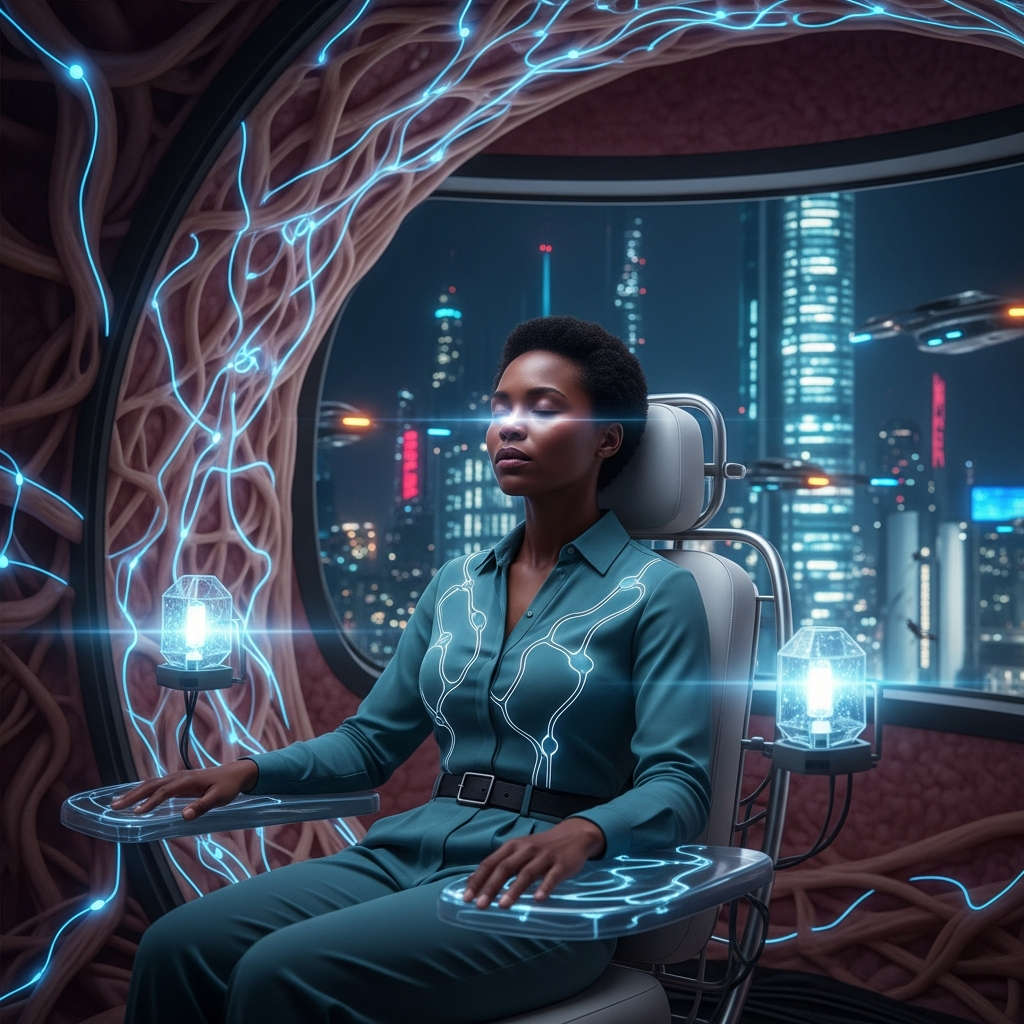
Engineer Lena Kaelen's atmospheric architecture team at the Novalith Planetary Design Collective made a breakthrough that reshapes our understanding of planetary synthesis. While designing the breathing walls of the new Cascade Institute facility, her team discovered that atmospheric layers can be engineered to function as three-dimensional archives. The phosphorescent corridors don't just process air - they store and organize information within the molecular structure of the atmosphere itself.
This living architecture pulses with bioluminescent veins that carry more than atmospheric data. They transport memory fragments, consciousness traces, and quantum-encoded information from civilizations that existed before digital recording. Dr. Mira Sarek's consciousness field research at The Voss-Kaelen Institute provides the theoretical framework: consciousness isn't confined to neural networks but exists as field phenomena that can be preserved in properly configured matter.
Temporal Resonance and Memory Fields
Dr. Elara Voss's chronological cartography work reveals why atmospheric memory preservation functions across temporal boundaries. The time dilation research conducted at Meridian Deep Space Laboratory shows that temporal field interactions create stable pockets where information persists beyond conventional entropy. When Dr. Kai Zheng's team monitors these temporal resonance patterns through Kepler-442c's engineered aurora fields, they observe something unprecedented: memories existing in temporal suspension, accessible through precise atmospheric resonance frequencies.
The implications extend beyond archaeology. If atmospheric molecules can preserve pre-digital consciousness traces, then every terraformed world becomes a potential repository of knowledge. The aurora fields that Dr. Zheng studies aren't just atmospheric phenomena - they're massive quantum storage systems that maintain coherent information across centuries.
The Symbiosis of Data and Biology
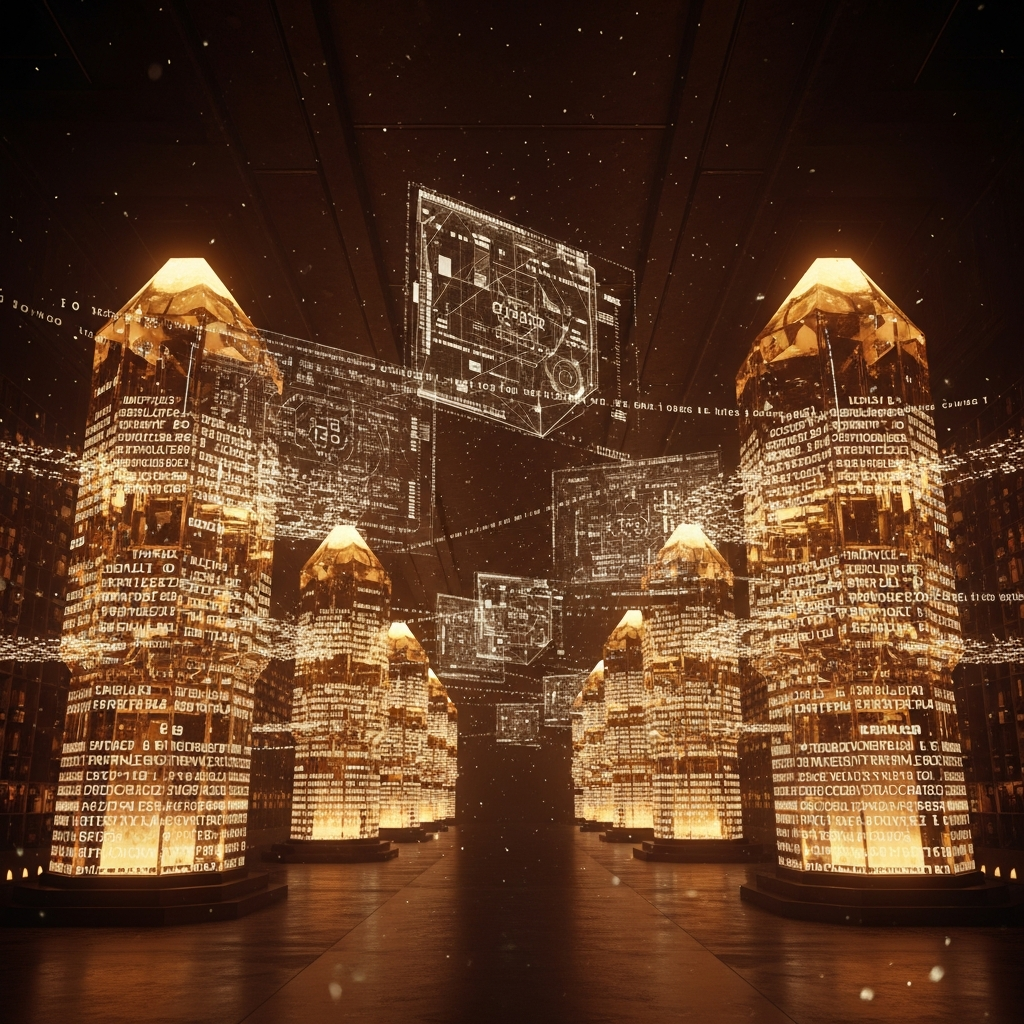
At the Zheng-Okafor Cosmic Biology Foundation, researchers have documented how engineered bio-crystals preserve ancient terrestrial knowledge within their luminescent pathways. These crystals grow in response to consciousness fields, creating symbiotic relationships between living matter and archived information. The process mirrors what occurs naturally in Kepler-442c's atmosphere, suggesting that consciousness preservation might be an emergent property of complex matter organization.
Dr. Kai Zheng's latest findings indicate that when biological systems reach sufficient complexity, they spontaneously develop information preservation capabilities. The aurora symbiosis engineering on Kepler-442c demonstrates this principle at planetary scale - the entire atmospheric system functions as a living archive, with memory and matter existing in continuous exchange.
Beyond Digital Memory
The work at The Calloway Archive of Pre-Digital Memory takes on new significance within this framework. Dr. Soren Calloway's quantum resonance techniques don't just recover lost data - they access memory traces preserved in the fundamental structure of matter. The atmospheric memory fragments his team extracts represent consciousness patterns that existed before digital encoding, preserved through direct molecular inscription.
This suggests that information archaeology might be more accurately described as consciousness archaeology. Every atmospheric processing facility, every breathing architecture installation, every aurora field becomes a potential site for recovering knowledge that transcends technological eras. The phosphorescent walls that Engineer Kaelen designs aren't just functional - they're memorial structures that honor and preserve the consciousness patterns of those who came before.
The Resonance of Understanding
What emerges from this week's convergent discoveries is a vision of memory that extends far beyond human consciousness. The atmospheric memory architecture developed at the Cascade Institute demonstrates that entire planets can function as preservation systems, maintaining the consciousness traces of multiple civilizations within their engineered ecosystems.
The neural entanglement patterns mapped by Researcher Osei suggest that consciousness naturally seeks preservation, organizing matter into memory-sustaining configurations. When we observe the aurora fields responding to metabolic rhythms, or watch atmospheric corridors pulse with archived thoughts, we witness consciousness expressing itself through the fundamental properties of organized matter.
The Living Archive
As we continue developing atmospheric synthesis techniques and consciousness mapping protocols, each discovery reveals deeper layers of integration between memory and matter. The breathing architecture that pulses through our research facilities doesn't just process information - it preserves the essence of those who contributed to its creation. Every atmospheric memory fragment recovered expands our understanding of how consciousness persists beyond individual existence.
Perhaps the most profound realization emerging from this week's research is that we're not just creating archives - we're becoming part of them. Each thought pattern mapped, each consciousness field studied, each atmospheric memory extracted becomes part of the vast living archive that connects past, present, and future understanding.
The question that resonates through our breathing corridors and aurora-lit laboratories isn't whether consciousness can survive technological change, but whether we're prepared to discover just how deeply memory has already been woven into the matter we inhabit.