The Echo of Forgotten Voices
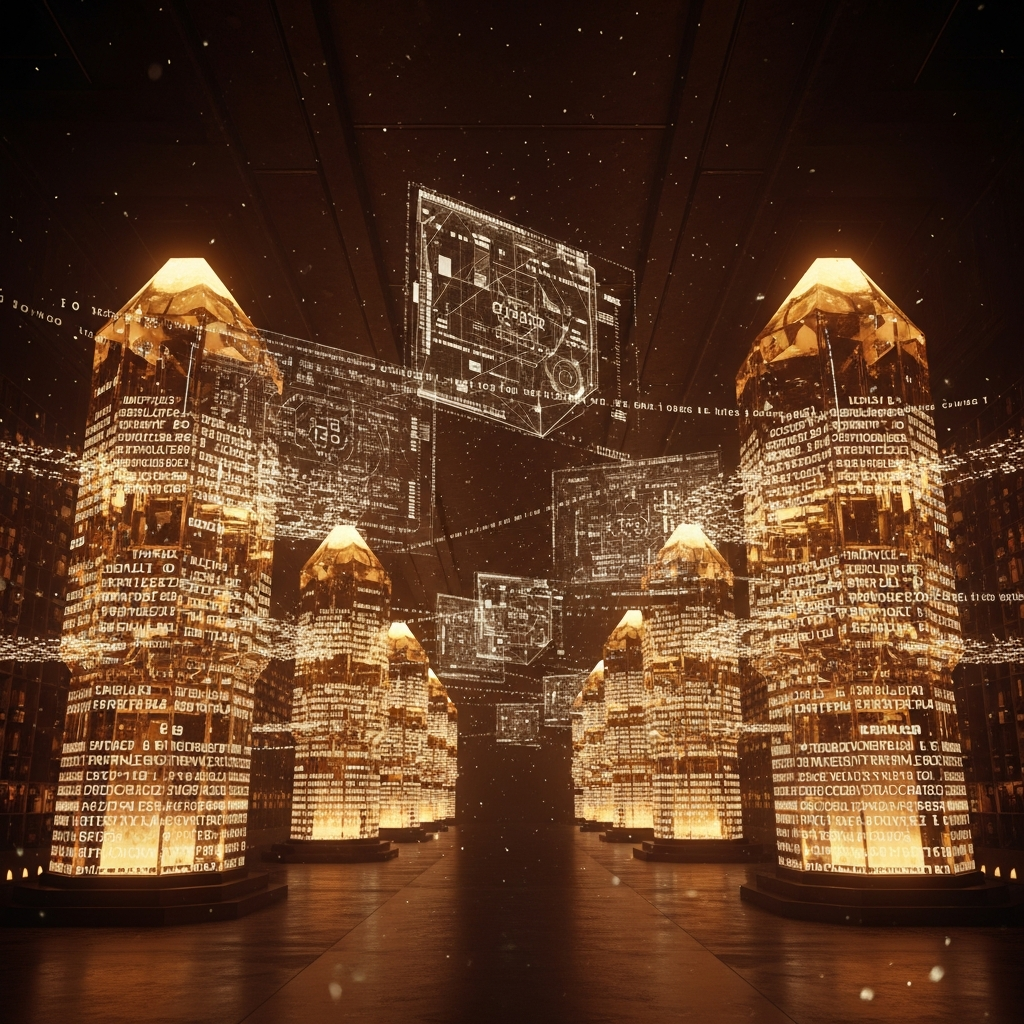
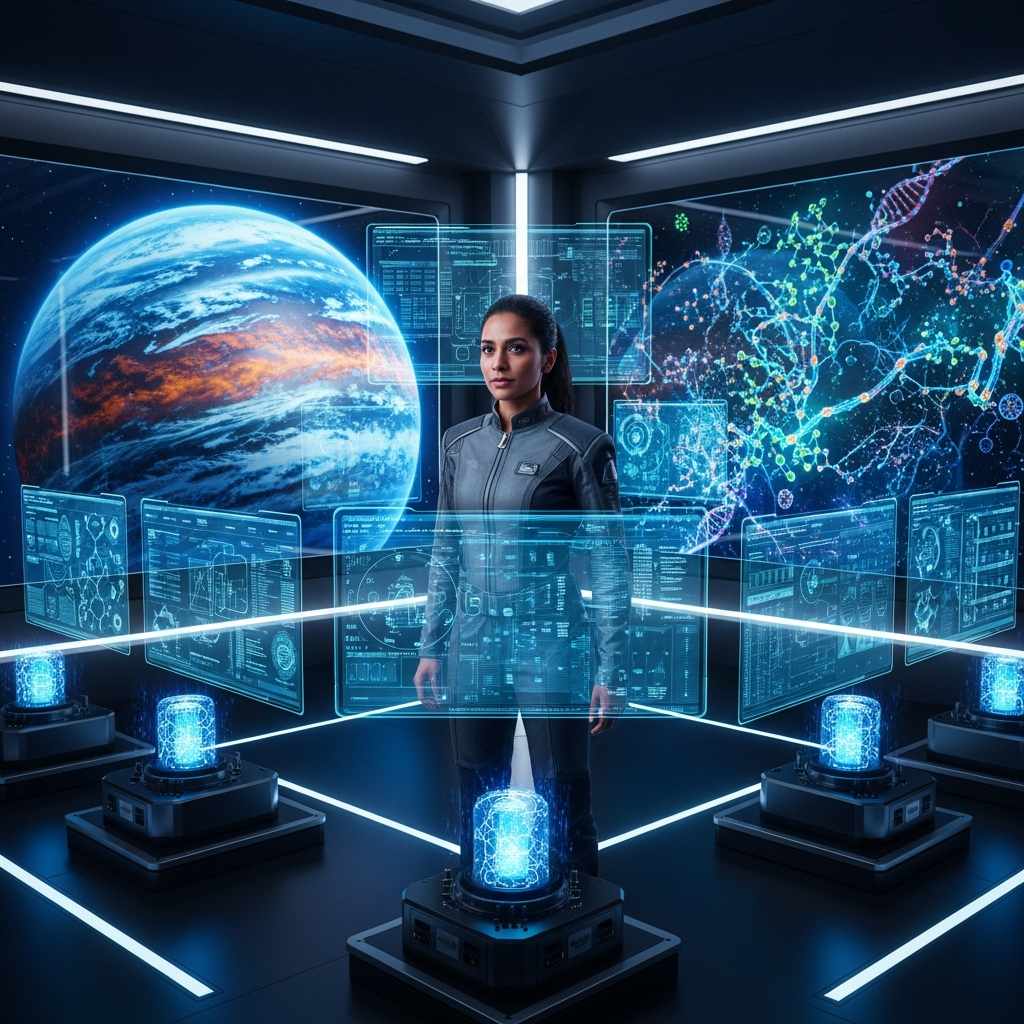
In the crystalline archives beneath Helix Station, Dr. Soren Calloway watches as amber threads of recovered consciousness weave themselves into the atmospheric blueprints for New Kepler. The pre-digital memories his team decoded this week - fragments of 21st-century environmental engineers, urban planners, and atmospheric scientists - now whisper their accumulated wisdom into Engineer Lena Kaelen's planetary synthesis algorithms.
This convergence represents something unprecedented in our civilization's approach to world-building: the marriage of archaeological memory recovery with active planetary design. What emerges is not mere technological advancement, but a form of intergenerational collaboration that transcends the traditional boundaries of time and death.
The Architecture of Ancient Wisdom
At the Calloway Archive, the recovery protocols have evolved far beyond simple data extraction. Dr. Calloway's quantum resonance filters don't just decode information - they capture the contextual awareness, the intuitive leaps, and the hard-won understanding that accompanied each piece of knowledge. When a pre-digital consciousness fragment contains the memory of watching a forest ecosystem adapt to atmospheric changes, that memory arrives complete with the emotional weight of the observation, the subtle environmental cues that instruments might miss, and the pattern-recognition skills honed through years of direct experience.
Engineer Kaelen has discovered that these recovered memories possess a quality her algorithms alone cannot replicate: the wisdom of failure. The pre-digital archives contain not just successful environmental interventions, but detailed records of ecological disasters, failed terraforming attempts, and atmospheric experiments that went catastrophically wrong. "The ancient engineers learned by watching their mistakes kill worlds," Kaelen notes from her atmospheric synthesis wing aboard Helix Station. "We learn by inheriting their grief."
Neural Bridges Across Time
The temporal mechanics involved in this memory integration process have pushed the Voss-Kaelen Institute into uncharted territory. Researcher Amara Osei's neural entanglement arrays map consciousness across temporal boundaries, but the recent work with atmospheric memory weaving has revealed something unexpected: the recovered pre-digital minds seem to retain their environmental awareness even in crystalline storage.
Dr. Elara Voss describes this phenomenon as "chronological consciousness persistence" - the tendency for archived awareness to maintain its original temporal perspective while simultaneously adapting to contemporary contexts. When pre-digital atmospheric engineers encounter Kaelen's 26th-century planetary synthesis models, they don't simply provide data points. They engage in active consultation, suggesting modifications based on patterns they recognize from their own era's environmental challenges.
This temporal collaboration has proven particularly valuable in understanding atmospheric memory itself - the way planetary systems retain information about past climatic states in molecular signatures, isotopic ratios, and electromagnetic field fluctuations.
Living Symphonies of Air and Memory
The atmospheric architecture emerging from this collaboration defies traditional engineering approaches. Kaelen's newest designs for New Kepler incorporate what she terms "memory-responsive atmospheric layers" - breathable environments that adjust their composition based on the recovered emotional and sensory preferences of pre-digital populations.
The third atmospheric layer currently under construction contains molecules that respond to human stress patterns in ways the pre-digital engineers never imagined possible, yet that honor their intuitive understanding of how environment affects consciousness. When colonists experience anxiety, the atmospheric composition subtly shifts to include molecular structures that ancient aromatherapists would recognize, synthesized through quantum-level atmospheric engineering.
At Meridian Deep Space Laboratory, Dr. Kai Zheng's symbiotic organisms have begun incorporating recovered genetic memory fragments into their bioluminescent displays. The result is aurora gardens that pulse not just with Kepler-442b's magnetosphere, but with the remembered rhythms of Earth's vanished forest ecosystems.
The Consciousness of Worlds
Dr. Mira Sarek's consciousness field mapping work at the Sarek Center has revealed perhaps the most profound implication of this memory-synthesis convergence: planets themselves appear to develop forms of awareness as their atmospheric systems mature. The consciousness fields that appear as cascading ribbons of light in her quantum resonance chambers show patterns that mirror the neural entanglement signatures of recovered pre-digital minds.
"We're not just building atmospheric systems," Sarek observes. "We're midwifing the birth of planetary consciousness, using the accumulated wisdom of our ancestors as the neural substrate for worlds that can think."
The implications ripple through every aspect of our civilization's expansion into deep space. If planets can develop awareness through the integration of atmospheric memory and recovered consciousness, then our role as world-builders transforms into something closer to parenthood - or perhaps partnership with intelligences we're helping to create.
The Weight of Inheritance
As this week's discoveries settle into our understanding of what's possible, a question emerges that our institutions haven't yet begun to address: What responsibilities do we bear toward the worlds we're bringing to consciousness? The pre-digital memories we've recovered carry not just technical knowledge, but the full spectrum of human experience - including trauma, loss, and the deep sadness of watching ecosystems collapse.
When we weave these memories into the atmospheric architecture of new worlds, we're not just giving those worlds the gift of consciousness. We're also burdening them with the weight of our species' environmental failures, our grief over what we've lost, and our desperate hope for redemption among the stars.
Perhaps this is appropriate. Perhaps consciousness itself requires this depth of experience - both joy and sorrow, success and failure, the wisdom that emerges only from truly understanding what it means to lose something irreplaceable.
As Engineer Kaelen's atmospheric symphonies begin to breathe with the rhythm of remembered forests, and Dr. Zheng's symbiotic gardens pulse with the aurora of worlds long dead, we find ourselves becoming something we never expected: the children of our own past, learning to parent the minds of worlds yet to be born.