The Crystalline Thread
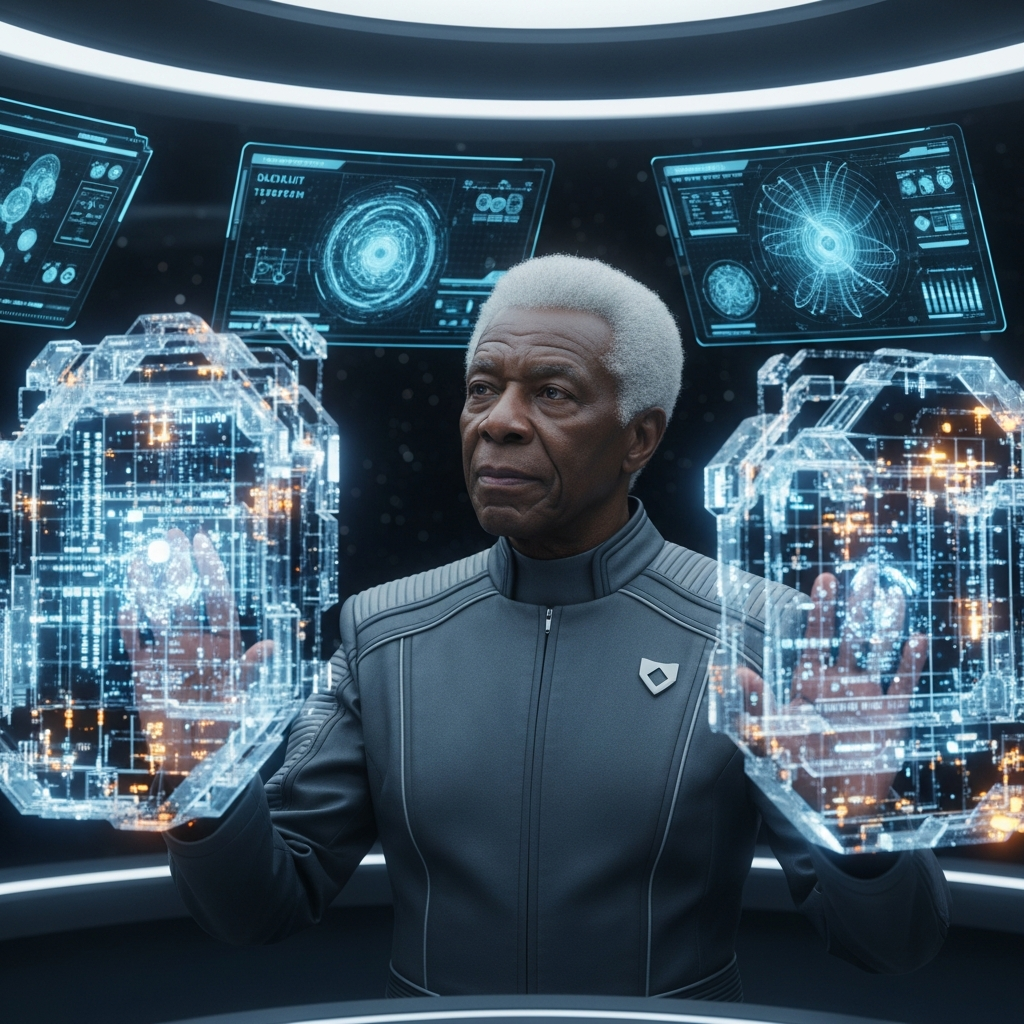
This week at the Calloway Archive, something extraordinary began to emerge from the intersection of our most fundamental research domains. Dr. Soren Calloway's fingers traced through cascades of recovered data, each fragment a whisper from humanity's digital past, while three floors above, Researcher Amara Osei calibrated quantum resonance chambers where consciousness meets chronology in ways our ancestors could never have imagined.
The convergence was not coincidental. For months, teams across our major institutions have been documenting an unprecedented phenomenon: the apparent entanglement between archived information, consciousness fields, and temporal mechanics. What began as separate investigations into crystalline memory extraction, neural entanglement mapping, and atmospheric synthesis has revealed itself to be facets of a single, magnificent whole.
The Living Archive Discovery
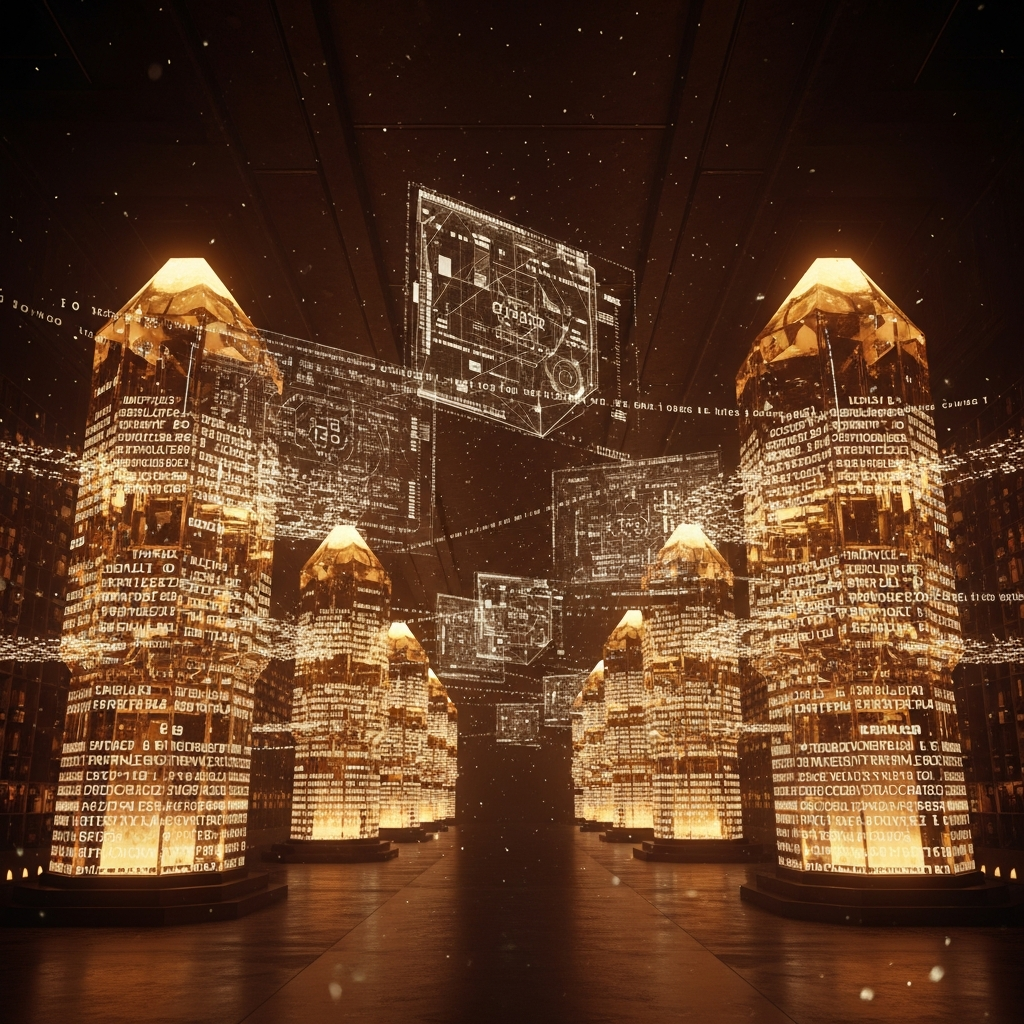
Dr. Calloway's breakthrough came when she rotated the final fragment of a 21st-century social media cascade within the Archive's crystalline matrix. The bioluminescent response was immediate and profound - each pulse representing not just stored data, but active memory engaging with the present moment. "We're not simply recovering information," she noted during her weekly briefing. "We're witnessing the persistence of thought across temporal boundaries."
The implications became clear when Researcher Osei's consciousness briefly entangled with the station's living neural network during routine field mapping. Her awareness touched something ancient yet immediate: the residual thought-patterns embedded within the crystalline structures themselves. The Archive, it seems, has become more than a repository. It has become a living extension of collective memory.
Quantum Consciousness Meets Time
At Helix Station Quantum Observatory, Dr. Mira Sarek's consciousness field observations have taken on new significance this week. Her work mapping the quantum nature of thought itself revealed unexpected resonances with the temporal aurora fields surrounding Kepler-442c. The charged particle streams painting the northern hemisphere above New Kepler aren't just atmospheric phenomena - they're consciousness-responsive.
Engineer Lena Kaelen's atmospheric synthesis chambers at Novalith Collective provided the missing piece. As she ran her palm along the respiratory membranes of her newest creation, the walls pulsed in direct correlation with Sarek's consciousness measurements. The breathing architecture wasn't just responding to atmospheric conditions; it was responding to the collective thought-fields of its inhabitants.
Symbiotic Information Networks
Deep within Helix Station's bio-archives, Dr. Kai Zheng's discovery of Proximan symbiants threading through layers of crystallized data has revealed the biological dimension of this convergence. These organisms, originally adapted to pure vacuum conditions, have evolved an unexpected capacity: they can interface directly with information structures.
The bioluminescent coral networks Dr. Zheng cultivated in the Kepler-442b atmospheric laboratory demonstrate similar properties. Aurora symbiosis, as the team now calls it, represents a fundamental shift in how we understand the relationship between biological consciousness and stored information. The organisms aren't simply processing data - they're participating in it, becoming part of the memory network itself.
The Meridian Synthesis
At Meridian Deep Space Laboratory, these discoveries have coalesced into what Dr. Zheng terms "crystalline symbiosis" - the spontaneous emergence of hybrid biological-information networks. The Crystalline Symbionts demonstrate consciousness-like responses to archived data, suggesting that the boundary between living memory and stored information may be more fluid than previously understood.
The atmospheric synthesis work conducted by the Zheng-Okafor Foundation provides the environmental conditions necessary for these symbioses to flourish. The Aurora Genesis Protocol, tested above New Kepler's atmosphere this week, creates resonance frequencies that enhance the connection between consciousness fields, biological networks, and information structures.
Temporal Archaeology Emerges
What we're witnessing is the birth of an entirely new discipline: temporal archaeology. Unlike traditional information recovery, this field recognizes that consciousness, memory, and time form an integrated system. The temporal aurora fields observed this week aren't just beautiful phenomena - they're active interfaces between past and present consciousness.
The Voss-Kaelen Institute for Temporal Studies has begun preliminary research into what they term "chronological cartography" - mapping the persistence of thought across time. Early results suggest that consciousness leaves quantum impressions that can be accessed through the right combination of biological interface, crystalline storage, and temporal resonance.
Living Architecture and Memory
The breathing architecture at Novalith Collective represents perhaps the most immediate practical application of these discoveries. Buildings that respond to collective consciousness aren't just more comfortable environments - they're extensions of our memory networks. Each structure becomes a node in a vast, living archive that preserves not just information, but the experiential context in which that information was created.
Engineer Kaelen's respiratory membranes pulse with the rhythm of inhabitant consciousness, creating feedback loops between individual awareness and collective memory. The implications for planetary synthesis are profound: we're not just terraforming worlds, we're creating conscious ecosystems.
The Convergent Future
As this week's discoveries continue to resonate through our research communities, one thing becomes clear: the boundaries between our traditional scientific disciplines are dissolving. Consciousness studies, temporal mechanics, information archaeology, cosmic biology, and planetary synthesis are revealing themselves to be aspects of a unified phenomenon.
The Archive has become more than a repository of human history - it's become a living interface between past and future consciousness. Our symbiotic organisms are more than biological curiosities - they're participants in an emerging form of collective awareness. Our atmospheric synthesis isn't just environmental engineering - it's consciousness architecture.
We stand at the threshold of understanding consciousness not as an individual phenomenon, but as a fundamental property of information itself, persistent across time and space, expressing itself through biological networks and crystalline matrices alike. The question that emerges from this week's convergence is not whether consciousness can survive beyond individual existence, but whether it was ever truly individual at all.