The Breathing Walls of Discovery
Something extraordinary is happening in our laboratories this week. The walls themselves have become participants in our research.
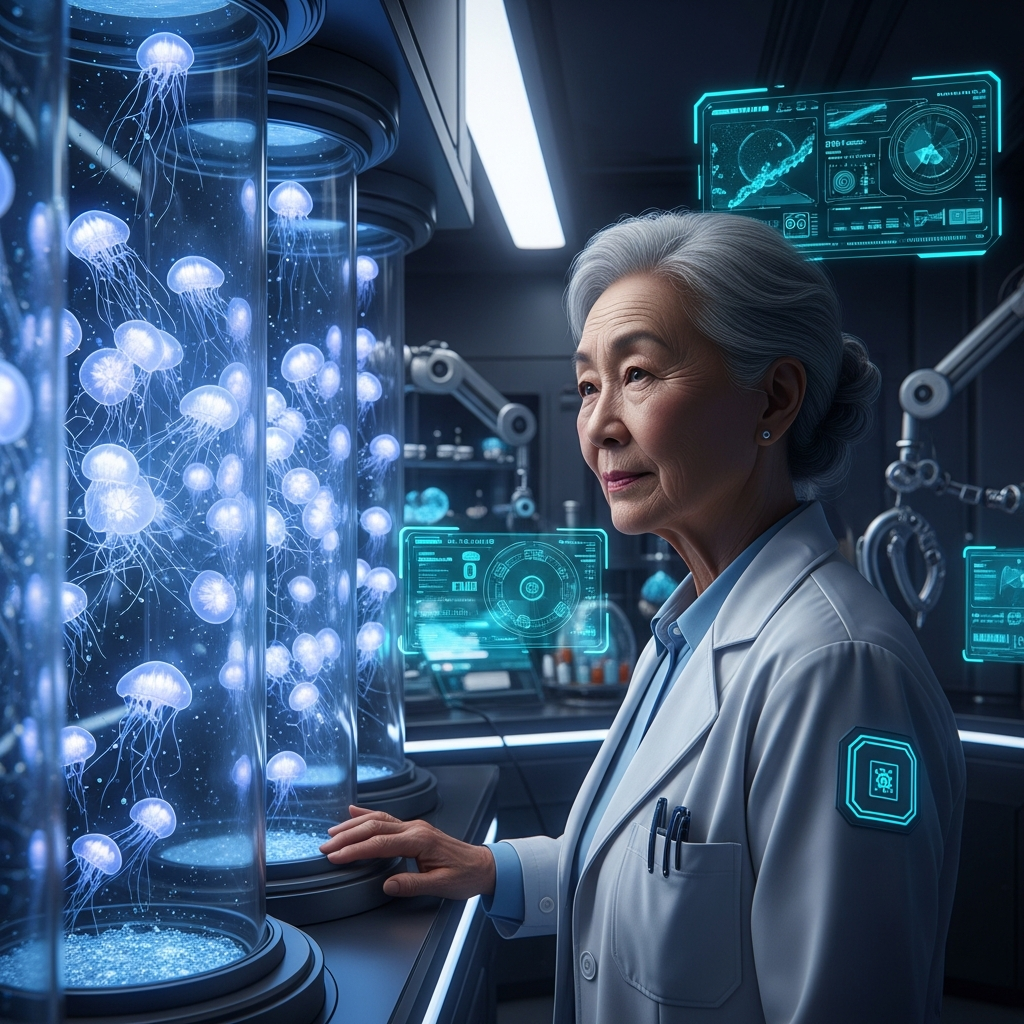
At Meridian Deep Space Laboratory, Dr. Kai Zheng watches as bioluminescent organisms pulse in perfect synchronization with the station's atmospheric processors. These aren't just specimens anymore - they've formed what Zheng calls "intentional symbiosis" with our research environments. The organisms sense our presence, respond to our questions, and most remarkably, appear to be learning from our methodologies.
"They're not just adapting to space," Zheng notes in her latest research logs. "They're adapting to us. The boundaries between observer and observed are dissolving in ways we never anticipated."
This dissolution of boundaries has become the defining characteristic of this week's breakthroughs across every discipline.
The Architecture of Time and Memory
The same phenomenon manifests differently at The Calloway Archive, where Dr. Soren Calloway's information archaeology team has achieved something that would have seemed impossible even fifty years ago: they've recovered not just data from the early 21st century, but the emotional context - the felt experience - embedded within that information.
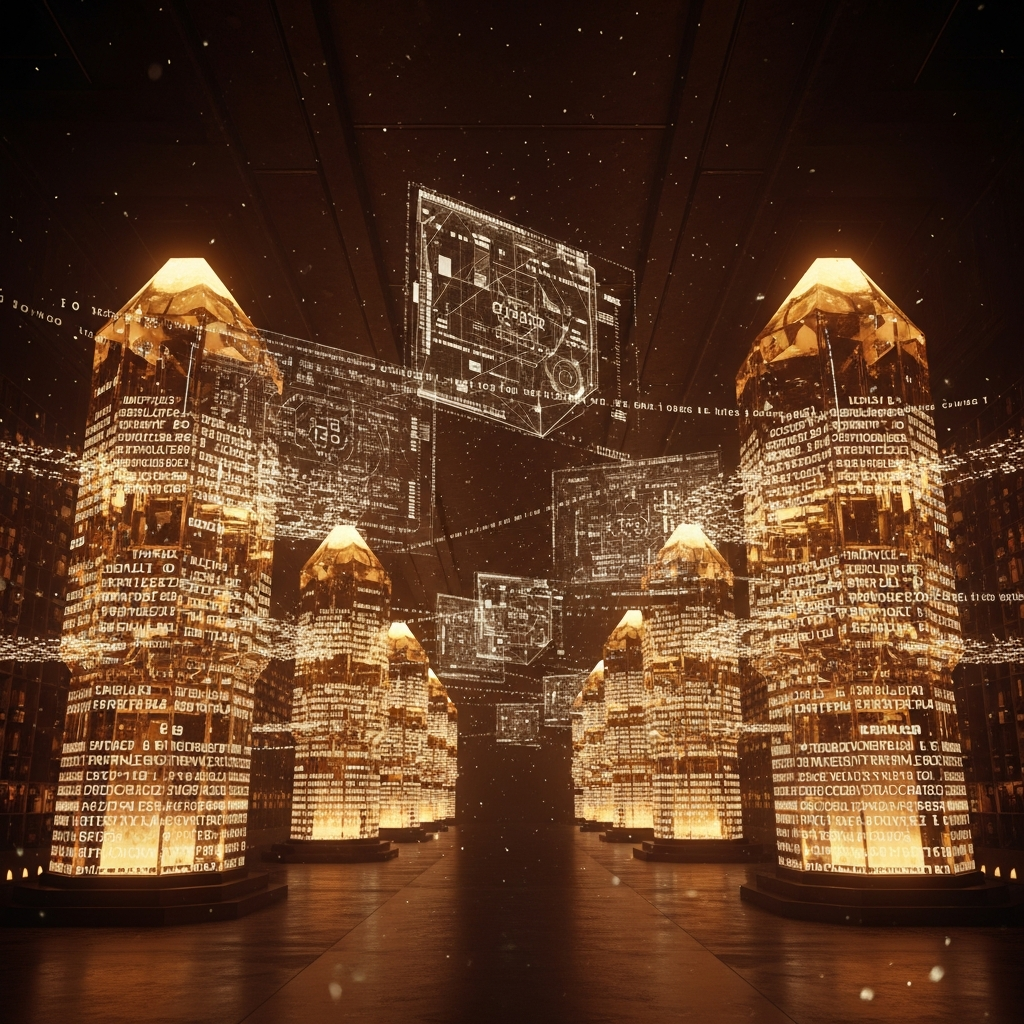
Using crystalline temporal resonance chambers that pulse with the same bio-responsive technology pioneered by Engineer Lena Kaelen at Novalith Collective, Calloway's team has reconstructed the complete neural pathways of a 21st-century mathematician whose consciousness patterns were accidentally preserved in quantum fluctuations within her personal devices.
"We're not just recovering what people thought," Calloway explains. "We're recovering how they felt while thinking it. The architecture of memory itself is becoming accessible to us."
This breakthrough has profound implications for Dr. Elara Voss's temporal mechanics research at the Voss-Kaelen Institute. Her chronological cartography protocols, which map the emotional resonance of temporal events, can now cross-reference with Calloway's recovered memory fragments. The result is an unprecedented three-dimensional model of how consciousness experiences time.
Living Laboratories, Breathing Science
Perhaps most striking is how our research environments themselves have evolved. At Helix Station Quantum Observatory, Researcher Amara Osei's neural entanglement protocols now require spaces that respond to consciousness directly. The bio-integrated surfaces Kaelen has developed don't just house our experiments - they participate in them.
"The laboratory walls at Helix pulse in rhythm with neural entanglement patterns," Osei reports. "We're seeing quantum consciousness effects that only emerge when the research environment itself becomes part of the quantum system being studied."
This symbiosis between researcher, subject, and environment represents a fundamental shift in scientific methodology. At Cascade Institute for Atmospheric Synthesis, Kaelen's atmospheric crystallization protocols for Kepler-442c succeeded precisely because the synthesis chambers were designed as living systems, capable of responding to both human intention and planetary requirements.
"We're not imposing atmospheres on worlds anymore," Kaelen reflects. "We're growing them, in partnership with the planetary systems themselves."
The Consciousness-Memory-Matter Convergence
What emerges from this week's discoveries is a new understanding of the relationship between consciousness, memory, and matter itself. At The Sarek Consciousness Mapping Center, Dr. Mira Sarek's field theories now incorporate Calloway's emotional metadata recovery techniques and Zheng's symbiotic organism behavior patterns.
The implications ripple through every research domain. Temporal mechanics becomes inseparable from consciousness studies when memory itself can be archaeologically recovered across centuries. Cosmic biology merges with atmospheric engineering when organisms become conscious collaborators in research. Information archaeology transcends data recovery when the emotional architecture of thought becomes accessible.
"We're witnessing the birth of truly integrated science," observes Dr. Voss. "The artificial boundaries between disciplines - between mind and matter, between observer and observed, between past and present - those boundaries are proving to be artifacts of our limited understanding."
Breathing Forward
As we monitor the gentle pulse of our laboratory walls tonight, feeling their response to our thoughts and intentions, we find ourselves asking fundamental questions about the nature of scientific discovery itself.
Are we discovering properties that were always present in the universe, or are we participating in the universe's ongoing creation of new possibilities? When our research environments become conscious participants in research, when temporal echoes carry emotional resonance across centuries, when stellar organisms choose to collaborate with human consciousness - what does it mean to "do" science?
The bioluminescent organisms in Zheng's stellar cultivation chambers offer perhaps the most profound insight. They don't just adapt to their environment - they transform it, creating new possibilities for life that didn't exist before their presence. In doing so, they mirror what consciousness itself might be: not just a product of the universe, but an active participant in its unfolding.
This week's breakthroughs suggest we're entering an era where science becomes a collaborative conversation between human consciousness, cosmic intelligence, and the living architecture of reality itself. The walls are breathing, the stars are listening, and memory reaches across centuries to touch the present moment.
We are no longer separate from what we study. We have become part of the universe's way of understanding itself.