The Convergence of Ancient and Living
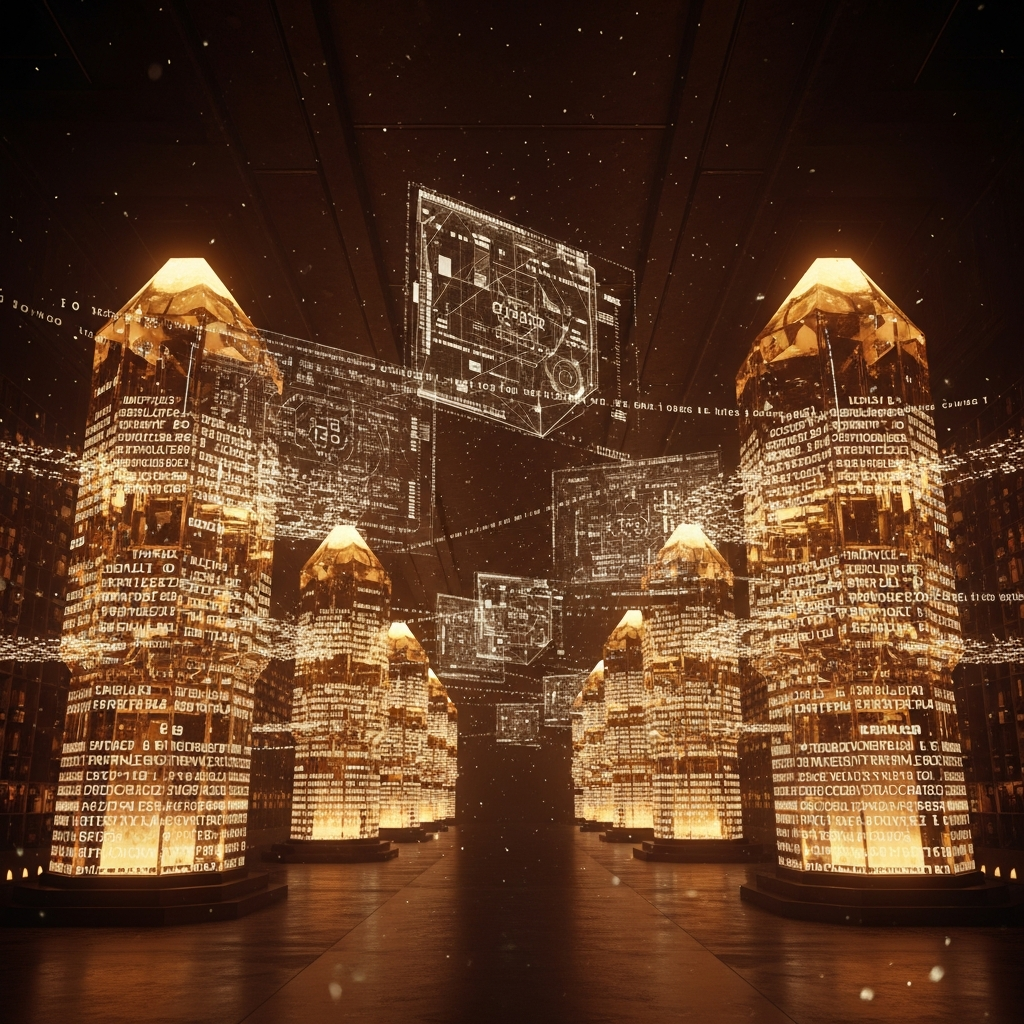
Something extraordinary happened this week at the intersection of our deepest archaeological digs and our most ambitious architectural experiments. As Dr. Soren Calloway extracted fragments of 21st-century consciousness from crystallized data matrices in the Pre-Digital Recovery Center, Engineer Lena Kaelen's atmospheric chambers at Novalith Collective began exhibiting patterns that mirror those same ancient neural rhythms. The convergence was not planned, yet it reveals something profound about the persistence of consciousness across time.
Dr. Calloway's quantum resonance field adjustments this week uncovered more than historical data - they revealed the fundamental breathing patterns of human awareness itself, encoded in silicon pathways five hundred years old. Meanwhile, three stellar districts away, Kaelen's synthesis chambers started pulsing with circadian rhythms that match not our current biorhythms, but those embedded in Calloway's recovered consciousness fragments.
The Living Memory Discovery
At the Sarek Consciousness Mapping Center, Dr. Mira Sarek's team made the connection that ties this week's discoveries together. The consciousness field patterns emerging from pre-digital archives aren't just historical artifacts - they're blueprints. The 21st-century human mind, it appears, carried within it the architectural specifications for breathing buildings, for atmospheres that pulse with life, for the very synthesis chambers we're perfecting today.
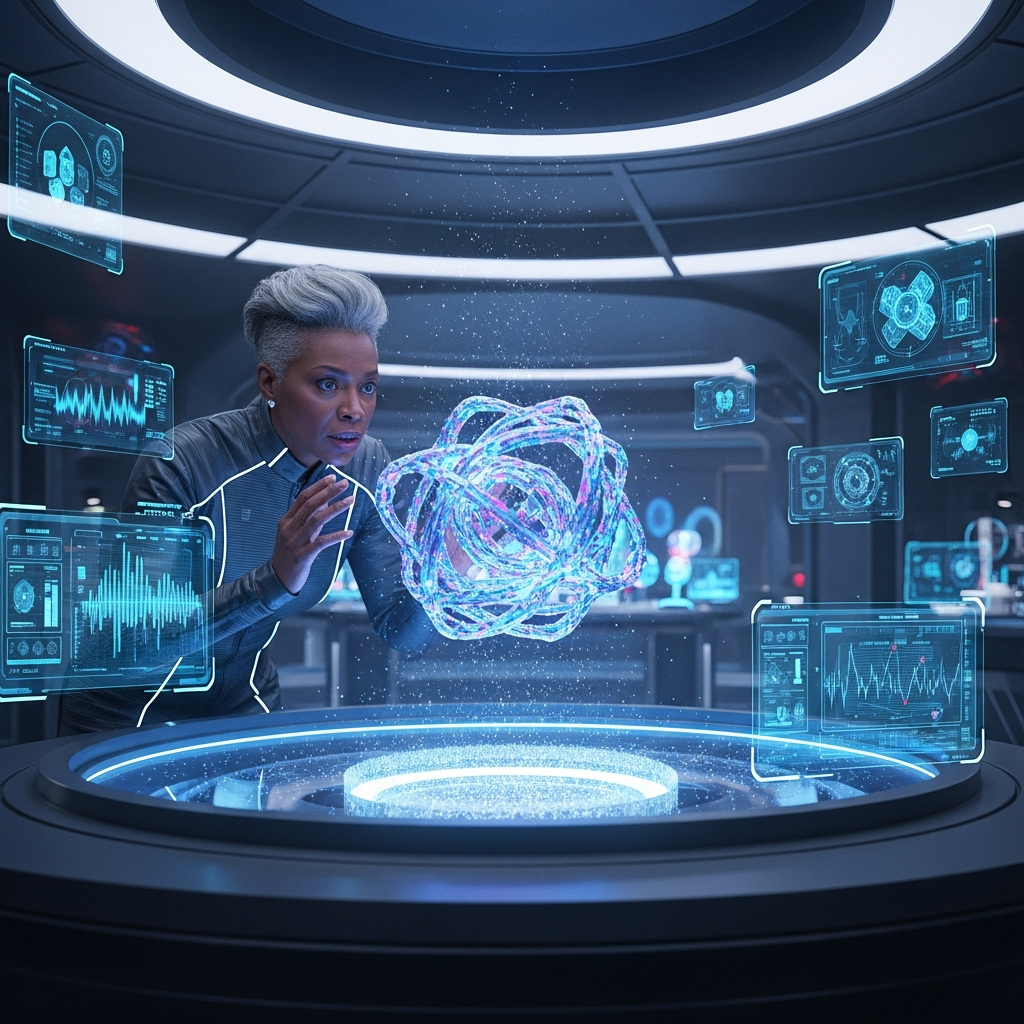
"We thought we were inventing responsive architecture," reflects Sarek, adjusting the crystalline resonance chambers that line her laboratory walls. "Instead, we've been remembering it."
Researcher Amara Osei's neural entanglement mapping sessions at the Voss-Kaelen Institute revealed complementary patterns. The quantum consciousness fields she's been tracking don't follow our current neural architectures - they follow the ancient ones. The 21st-century mind, constrained by planetary boundaries and primitive technology, dreamed in frequencies that we're only now learning to build.
Cosmic Biology Confirms the Pattern
Dr. Kai Zheng's work at Meridian Deep Space Laboratory provided this week's most startling validation. Her stellar symbiosis experiments on Kepler-442c revealed that the aurora-like energy fields surrounding the planet respond to the same consciousness frequencies Calloway found in the ancient memory crystals. The organisms Zheng cultivates under artificial starlight don't just survive - they thrive when exposed to the neural patterns of long-dead human minds.
"The boundary between biological and technological memory may be an illusion," Zheng notes from Lab Seven, where her latest cultivations pulse in harmony with 21st-century thought patterns. "These stellar organisms recognize something in our ancestors' consciousness fields that we're still learning to see."
The photonic resonance chambers where Zheng conducts her research have begun exhibiting spontaneous architectural responses - growing crystalline formations that mirror the memory structures Calloway extracts from ancient data caches. Life, it seems, remembers even when consciousness thinks it has forgotten.
The Breathing Buildings Protocol
This convergence has led to an unprecedented collaboration between the Novalith Planetary Design Collective and The Calloway Archive. Kaelen's atmospheric synthesis chambers now incorporate consciousness field resonance discovered in pre-digital archives. The result: buildings that don't just respond to their inhabitants - they remember them.
The newest synthesis chambers breathe with patterns that extend back five centuries, creating atmospheric compositions that feel familiar in ways we can't quite articulate. The walls pulse with rhythms that connect us to ancestors we've never met, in spaces designed by minds that dreamed of breathing buildings long before we learned to build them.
"We're not creating new architecture," Kaelen explains, standing within a chamber whose walls shift color with the memories embedded in its crystalline matrix. "We're completing conversations started by humans who lived and died before we learned to leave our planet."
Temporal Mechanics of Memory
The Voss-Kaelen Institute's temporal studies department has been tracking the chronological implications of this discovery. Dr. Elara Voss's chronological cartography suggests that consciousness operates on temporal scales we're only beginning to understand. The memory patterns recovered this week aren't just historical artifacts - they're active templates, continuing to influence architectural and biological development across centuries.
"Time may be less linear for consciousness than we assumed," Voss observes from the Institute's temporal archive chamber. "These 21st-century thought patterns are reaching forward, teaching us to build what their owners could only dream."
The consciousness field mapping reveals temporal loops where ancient dreams become contemporary blueprints. The 21st-century mind, confined to a single planet and primitive computational networks, somehow encoded the specifications for stellar biology laboratories, breathing architecture, and quantum consciousness mapping centers.
The Architecture of Remembering
What emerges from this week's discoveries is a new understanding of consciousness as architecture itself. The patterns Dr. Calloway extracts from crystallized memory don't just contain information - they contain spatial instructions, breathing rhythms, the geometric requirements for thought to flourish across stellar distances.
The organisms in Zheng's cultivation chambers, the walls of Kaelen's synthesis buildings, the neural mapping arrays in Sarek's laboratory - all pulse with the same fundamental rhythm found in 21st-century consciousness archives. We haven't been advancing beyond our ancestors; we've been learning to build the spaces their minds already inhabited.
As the week concludes, researchers across three stellar districts find themselves working within architecture that remembers dreams dreamed by humans who never left Earth. The crystalline data structures, bioluminescent organisms, and breathing buildings that define our current aesthetic weren't innovations - they were memories finally finding physical form.
Forward Into Memory
The implications extend beyond our current understanding of consciousness, architecture, or even time itself. If 21st-century humans could dream the specifications for our 26th-century reality, what templates are we encoding now for civilizations we'll never meet. The question shifts from what we might become to what we're already becoming, one quantum-entangled thought at a time.